

What to Expect at a Shooting Range for the First Time
Quick answer: At a shooting range for the first time, expect a quick ID check and waiver, a hands-on safety briefing from a range safety officer, and required eye and ear protection before you ever pick up a firearm. No experience is necessary—an instructor stays with you the whole time, guiding your stance, grip, and trigger control, and most first-timers find it far less intimidating (and far more controllable) than they expected from movies or TV.
If you’ve never been to a shooting range, it’s completely normal to feel a little nervous beforehand—most first-time visitors do. The good news is that a well-run range is built entirely around making that first experience safe and approachable, not intimidating. Here’s what actually happens, step by step, so there are no surprises when you arrive.
Before you go: what to bring and wear
You don’t need any special gear or clothing to shoot for the first time—there’s no dress code beyond a practical recommendation: closed-toe shoes. Fired cartridge cases (brass) eject and can land on the ground around you while you’re shooting, and closed shoes simply protect your feet from hot brass rather than being any kind of safety requirement. Bring a valid government-issued photo ID (a passport works for international visitors), since ID is checked for every shooter regardless of experience level. If you’re under 18, check the specific range’s age policy in advance—many ranges, including Las Vegas Shooting Center, allow shooters as young as 8 with a parent or legal guardian present to sign a waiver.
When you arrive: check-in and package selection
Your visit starts with a quick check-in: showing ID, signing a liability waiver, and either confirming a package you’ve already booked or choosing one on the spot with staff who can walk you through the options based on what you want to shoot. This is also when you’ll find out whether you’re shooting alone, with a private instructor, or alongside friends in adjoining lanes—group members who don’t want to shoot are typically welcome to come along and watch.
The safety briefing
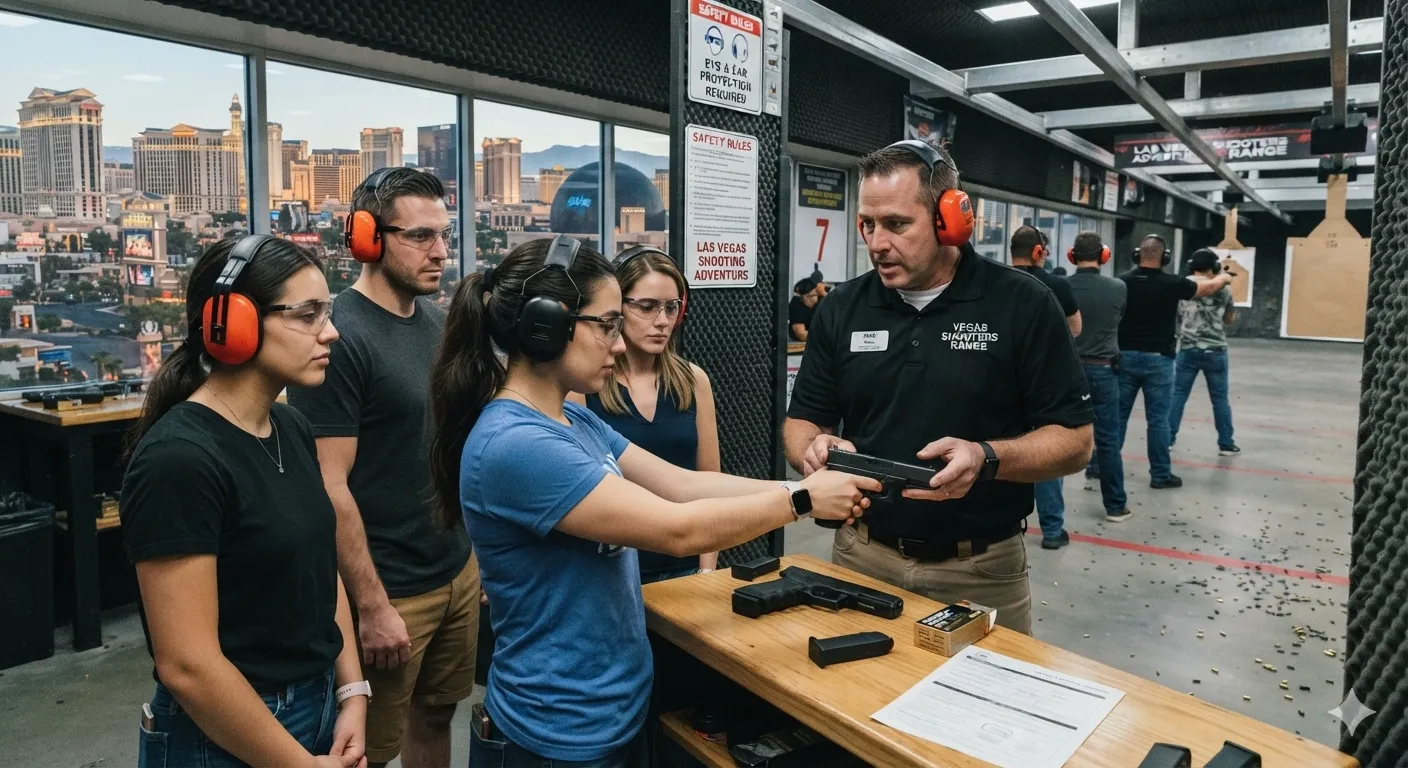
Before anyone touches a firearm, every first-time shooter gets a safety briefing covering the fundamentals that apply no matter what you’re shooting: treat every firearm as if it’s loaded, never point the muzzle at anything you don’t intend to shoot, keep your finger off the trigger until you’re actually ready to fire, and always be sure of your target and what’s behind it. You’ll be fitted with eye protection and hearing protection—both required, not optional—and a range safety officer will cover exactly how your specific firearm works: how to hold it, how to load it, and what to expect when you fire.
What it actually feels like
This is the part most first-timers are curious (and a little anxious) about, so here’s the honest version: it’s loud, even with hearing protection on, which is part of why hearing protection is required rather than optional. You’ll feel real recoil—firearms push back against your hands and shoulders when fired—but instructors position and brace you properly beforehand, so it’s rarely as jarring as people expect. There’s a visible muzzle flash and the smell of gunpowder, and spent brass ejects to the side as you fire. If you’re shooting something fully automatic, the experience is more controlled than movies suggest—modern firearms are designed to be manageable, and instruction specifically covers how to keep it steady rather than letting it “walk” off target the way it does in action films.
Range commands and basic etiquette
Ranges run on a simple set of verbal commands from the range safety officer, and following them immediately is the one real rule that matters. “Cold range” means no one is allowed to handle firearms—this is when people can go downrange to check or change targets. “Hot range” means shooting is active. Beyond that, basic etiquette is mostly common sense: keep the muzzle pointed downrange at all times, don’t touch a firearm on the bench you’re not actively using, and don’t approach or distract another shooter mid-string. Staff and instructors are there specifically to guide you through all of this in real time, so there’s no need to memorize it beforehand.
After your session
Once you’ve finished your rounds, you’ll clear and secure the firearm with your instructor, and your gear (eye and ear protection) gets returned. Most ranges are happy to have you take photos or video during your session (check first if photography policy applies to your specific range), and a retail store on-site is common if you want to browse gear or merchandise afterward. If you booked a package with hotel transportation included, this is when you’ll head back to the shuttle for your ride.
Common first-timer worries, addressed
“Is it going to hurt?” — Recoil is real but manageable, especially with proper instruction and firearm selection matched to first-timers. “What if I do something wrong?” — This is exactly what the range safety officer is there for; they’re watching and coaching the entire time, not just standing nearby. “Is it actually safe?” — Indoor ranges are highly controlled environments with strict safety protocols, protective equipment, and direct supervision specifically because they’re designed for people with zero prior experience. “Will I feel out of place if I’ve never held a gun?” — First-time shooters are the majority of visitors at a range built around tourism and beginners, not the exception.
Frequently asked questions
Do I need any experience to shoot at a range for the first time? No. A range built for first-timers provides full instruction before you fire anything, and a range safety officer stays with you throughout the session.
What should I wear to a shooting range? There’s no dress code beyond closed-toe shoes, which protect your feet from hot brass that ejects as you shoot. Comfortable, casual clothing is fine.
Is it loud, and do I need hearing protection? Yes, firearms are loud even indoors, which is why hearing protection is provided and required for every shooter, along with eye protection.
What ID do I need to shoot for the first time, especially as a tourist? A valid government-issued photo ID is required for every shooter; a passport works for international visitors.
Is there a minimum age to shoot at a range? It depends on the specific range’s policy—many allow shooters as young as 8 years old with a parent or legal guardian present to sign a waiver.
What if I’m scared of the recoil or the noise? This is one of the most common first-timer concerns, and instructors specifically address it by starting with proper stance, grip, and bracing before you fire, and by talking you through what to expect before the first shot rather than leaving you to guess.
Ready to try it for yourself? Book your first shooting experience at Las Vegas Shooting Center—no experience necessary, and free hotel pickup is included with any package $100 or more.